Golden Teacher Mushrooms What They Are and Why They Matter for Psychedelic Science
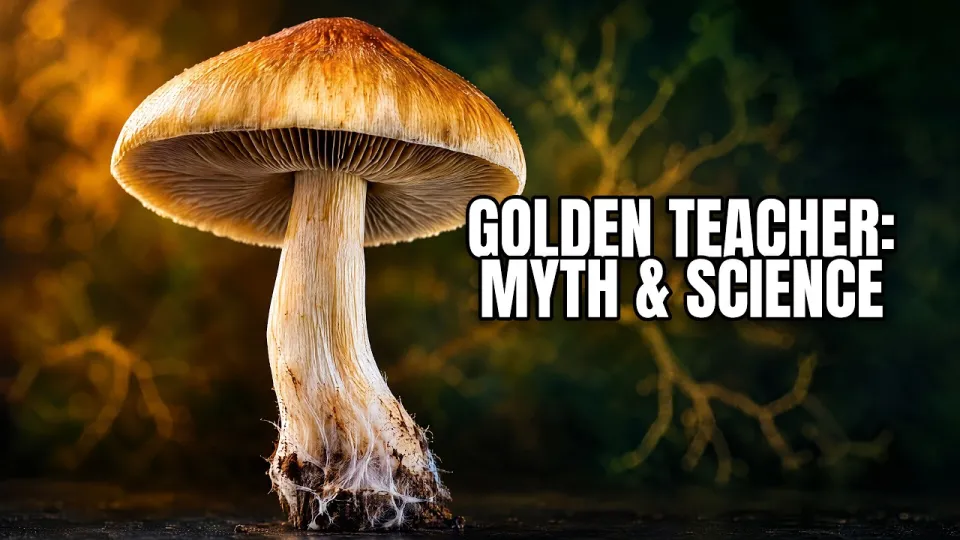
Video: Golden Teacher Mushrooms: Myth, Chemistry & What Science Knows
· based on the channel Shroomverse
What Are Golden Teacher Mushrooms
Golden Teacher mushrooms are a widely recognized variety of psilocybin mushrooms known for their characteristic golden caps and the cultural significance implied by their name. Despite their popularity, the exact biological classification and origin of Golden Teachers remain unclear, as the label is mostly a community-based term rather than a formal taxonomic designation.
The Uncertain History and Taxonomy
The name "Golden Teacher" originated within the psychedelic community and refers to a distinct cultivated form of Psilocybe cubensis. However, the taxonomy of psilocybin mushrooms is complex, and different strains may bear similar names without genetic confirmation. This means that while Golden Teacher mushrooms are associated with certain traits, such as cap color and growth patterns, the lineage and genetic consistency vary among samples.
Chemistry Behind Golden Teacher Mushrooms
The primary psychoactive compounds in Golden Teacher mushrooms are psilocybin and its metabolite psilocin. These substances interact with serotonin receptors in the brain, particularly the 5-HT2A receptor, producing psychedelic effects. Brain imaging studies have shown that psilocybin alters neural networks involved in the sense of self and consciousness, which accounts for the subjective experience users report.
Blue Bruising and Chemical Variation
One notable feature of Golden Teacher mushrooms is blue bruising, a reaction that occurs when the mushroom tissue is damaged. This blue coloration results from the oxidation of psilocin but does not reliably indicate higher potency or chemical concentration. Chemical analyses reveal that psilocybin and psilocin content can vary significantly between individual mushrooms and even between different parts of the same mushroom, influenced by cultivation conditions and genetics.
Clinical Research and Psychedelic Effects
Clinical trials studying psilocybin use standardized doses of purified compounds combined with psychological support rather than whole mushrooms. While Golden Teacher mushrooms are popular in recreational and therapeutic contexts, scientific research focuses on controlled psilocybin administration to ensure consistency and safety. This means the experience and effects attributed to Golden Teacher mushrooms may not fully align with clinical research outcomes.
Myths Versus Scientific Reality
Many myths surround Golden Teacher mushrooms, including beliefs about guaranteed effects based on strain names or physical traits. Scientific evidence emphasizes that the psychedelic experience depends on dosage, individual physiology, and context rather than strain labels alone. Understanding these distinctions helps set realistic expectations and supports responsible use and research.
Conclusion
Golden Teacher mushrooms represent a culturally significant and visually distinctive variety of psilocybin mushrooms whose exact taxonomy remains uncertain. Their psychoactive effects stem from psilocybin and psilocin, compounds extensively studied in clinical settings. However, variations in chemical content and the influence of myths mean the name alone cannot guarantee a fixed experience or potency. The Shroomverse channel provides an insightful exploration of these topics, bridging the gap between folklore and science in the world of psychedelic mycology.
Key takeaways
- Golden Teacher is a popular name for a psilocybin-containing mushroom variety.
- The mushroom’s exact taxonomy and lineage are uncertain and community-based.
- Psilocybin and psilocin are the key active compounds affecting brain receptors.
- Blue bruising indicates chemical reactions but not potency strength.
- Clinical studies focus on standardized psilocybin, not specific mushroom strains.
Source: Golden Teacher Mushrooms: Myth, Chemistry & What Science Knows · Markdown version
Questions & answers
What makes Golden Teacher mushrooms different from other psilocybin mushrooms?
Golden Teacher mushrooms are distinguished mainly by their golden caps and community-based naming rather than unique genetic markers. Their chemistry is similar to other Psilocybe cubensis varieties, with psilocybin being the active compound.
Does the blue bruising on Golden Teacher mushrooms indicate higher potency?
No, blue bruising is a chemical reaction from psilocin oxidation but does not reliably indicate the strength or concentration of psychoactive compounds in the mushroom.
Are the effects of Golden Teacher mushrooms consistent across all samples?
No, chemical composition varies between samples, so effects can differ depending on factors like cultivation, dosage, and individual user physiology.
How does clinical psilocybin research relate to Golden Teacher mushrooms?
Clinical research uses standardized psilocybin doses administered with psychological support, not whole mushrooms. Therefore, findings relate to the active compounds rather than specific mushroom strains like Golden Teacher.